A memorable town name can make a fictional setting feel unsettling before the story even begins. The best Scary Town Names often combine familiar landmarks, dark history, and an ordinary-sounding promise that hides something disturbing. A place called Blackwater Hollow feels believable; discovering why nobody fishes in its creek makes it frightening.
This guide brings together Scary Town Names, creepy fictional settlements, haunted villages, abandoned mining communities, Halloween settings, dark fantasy locations, and eerie city ideas. You’ll also find a practical naming formula and real American ghost-town history to help you create a setting that feels grounded rather than randomly sinister.
The Real History of Ghost Towns Why America’s Abandoned Places Got Their Names
Many American ghost towns began with practical names connected to a person, a natural feature, a mining claim, or a nearby railroad. Their unsettling reputations came later, when fires, exhausted resources, disasters, or changing transportation routes emptied once-busy communities.
For writers, this history offers a useful lesson: a believable town usually has a reason to exist before it has a reason to become frightening. A former mining settlement, river port, railroad stop, or religious community gives your fictional location a history readers can imagine.
Famous Real Ghost Towns and Why Their Names Endure
| Real place | Historical background | What writers can learn |
| Bodie, California | Named for prospector W. S. Bodey, who discovered gold in the area. The mining settlement grew rapidly during the late 1870s before declining. | A simple personal name can become memorable through the history attached to it. |
| Centralia, Pennsylvania | An underground mine fire began in May 1962. The Pennsylvania Department of Environmental Protection documents the fire, relocation efforts, and continuing hazards. | An ordinary name can become disturbing when a real disaster changes the place. |
| Kennecott, Alaska | A remote copper-mining community developed around major mining operations. Mining activity ended after the ore deposits were exhausted, and the town was abandoned. | Connect a settlement to a resource, industry, or company to make its rise and decline believable. |
| Rhyolite, Nevada | A former gold-mining boomtown whose surviving ruins include the Cook Bank Building and a bottle house. | A name drawn from local geology can sound distinctive without relying on horror words. |
| Bannack, Montana | A historic mining settlement that became Montana’s first territorial capital. It is now preserved as a state park. | A town can feel haunted through preserved buildings, old streets, and forgotten ambitions. |
Bodie is especially useful as a model because its name comes from a real person rather than a supernatural legend. The National Park Service describes its growth after major gold discoveries in the 1870s and its eventual decline after mining operations stopped in 1942. California State Parks preserves the remaining town in a condition known as “arrested decay.”
Centralia offers a different kind of inspiration. Its name sounds conventional, but the mine fire that began in 1962 transformed the community’s history. Pennsylvania’s official records describe property acquisitions, relocation, and continuing dangers from gases and unstable ground. Commonwealth of Pennsylvania+1
Kennecott demonstrates how geography and economics can shape a settlement. The National Park Service documents its copper-mining operation, remote location, railroad infrastructure, and abandonment after the ore ran out.
These are real historical places, not fictional haunted destinations. Their stories can inspire horror settings, but writers should distinguish documented history from invented ghosts, curses, and paranormal activity.
The Phonosemantics of Scary Place Names Why Certain Names Feel Haunted
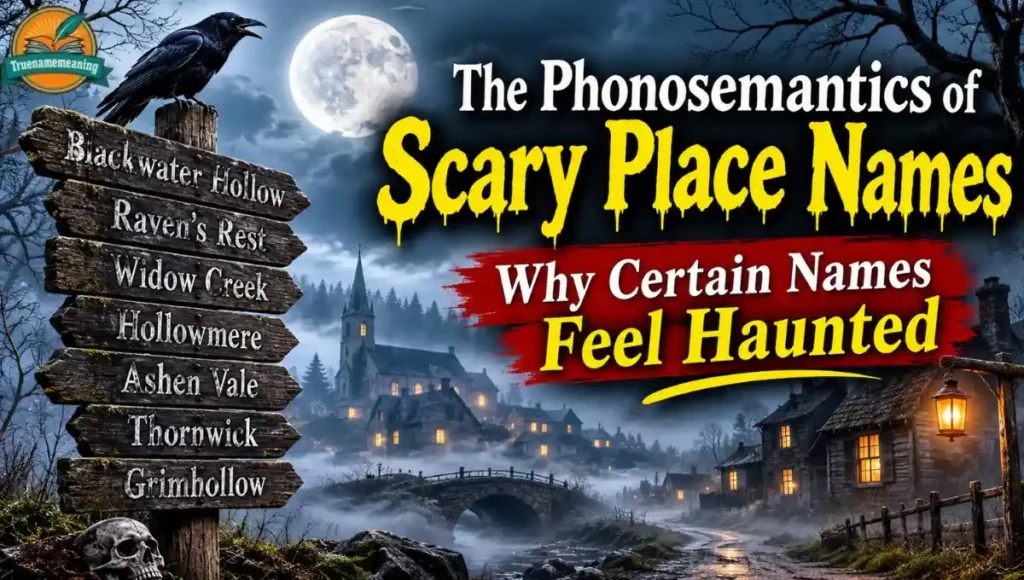
The sound of a name can influence the mood readers associate with a place. Linguists study this area through sound symbolism, which explores how speech sounds may create associations with qualities such as size, texture, shape, or emotional tone. These associations are tendencies, not universal rules.
For horror writing, hard consonants and short syllables can make a name feel abrupt, while softer sounds may create a quiet, mournful atmosphere. Compare these examples:
- Grimrock: Short, hard sounds suggest a harsh settlement surrounded by stone.
- Whispering Pines: Soft sounds create a quiet, watchful forest atmosphere.
- Blackwater: A familiar geographic word becomes ominous through its dark modifier.
- Hollowmere: The combination feels old, isolated, and slightly mysterious.
- Ashfall: A compact name suggests fire, ruin, or a past disaster.
One dependable approach is to combine a recognizable geographic feature with an unsettling modifier. Words such as creek, ridge, hollow, marsh, cove, and pines make a fictional location feel geographically possible. Words such as black, silent, widow, ash, lost, and mourning add atmosphere.
The goal is not to make every name sound aggressively evil. Subtle names often work better because they allow the reader to discover the danger gradually.
Scary Town Name Generator Formula
A useful naming formula gives you a starting point without making every fictional settlement sound alike. Use the following four steps to create Scary Town Names that fit your setting, history, and story.
Step 1: Choose a Real Geographic Feature
Start with a physical feature that could reasonably attract settlers or define the landscape. A creek might support farms, a ridge might offer a defensive position, and a coastal cove might support fishing boats.
Useful geographic words include:
- Water: Blackwater, Creek, Bay, Cove, Marsh, River, Falls
- Land: Ridge, Hollow, Valley, Gulch, Flats, Crossing
- Trees and wilderness: Pines, Forest, Briarwood, Thornfield
- Remote terrain: Mountain, Pass, Hollow, Ravine, Basin
A location-based word helps readers picture the settlement. It also makes your Scary Town Names easier to remember because the name has a clear visual anchor.
Step 2: Add a Dark or Ambiguous Modifier
Choose a modifier that hints at the town’s reputation without explaining everything. You can suggest danger, loss, silence, or a forgotten event.
Try words such as:
- Darkness: Black, Shadow, Midnight, Gloom, Night
- Loss: Lost, Forgotten, Hollow, Last, Mourning
- Nature: Ashen, Thorn, Raven, Frost, Withered
- Unease: Silent, Widow, Hollow, Crooked, Whispering
For example, Raven Ridge sounds like a remote place associated with dark folklore, while Widow Creek suggests a story that residents may avoid discussing.
Step 3: Consider the Town’s Real Economic Reason for Existing
Give the settlement a believable foundation. Was it built around a silver mine, a railroad depot, a fishing harbor, a lumber mill, a church, or a crossroads?
The original purpose can shape the name:
- Mining settlement: Iron Hollow, Black Ore, Cinder Gulch
- Railroad town: Last Track, Ash Junction, Deadman Station
- Fishing village: Widow’s Cove, Saltgrave Bay, Drowned Harbor
- Lumber town: Raven Pines, Thornmill, Hollow Timber
- Religious settlement: Mercy’s End, Saint Vesper, Pilgrim’s Rest
This background also gives you story opportunities. A town named after a prosperous mine may have empty company houses, a closed school, and a forgotten cemetery after the mine shuts down.
Step 4: Test for the Optimism-Gap
The “optimism-gap” is a useful creative technique: give the town a name that reflects what its founders hoped it would become, then contrast that hope with what happened later.
For example, Hopewell might have been named by settlers expecting a prosperous future. Years later, the community could become known for an abandoned hospital or a mysterious disappearance. The contrast between the hopeful name and the unsettling reality creates a stronger effect than simply calling the place “Evil Town.”
Try the same technique with names such as New Promise, Prosperity Falls, Mercy Crossing, or Fortune Valley. The name should make sense in the town’s history, even if its present-day meaning feels tragic.
Best Spooky Town Names
The best spooky town names are memorable, easy to pronounce, and flexible enough to fit different genres. These options work for novels, short stories, Halloween events, tabletop campaigns, and fictional maps.
Best Spooky Town Names with Notes
- Blackwater Hollow: A riverside town surrounded by fog and old secrets.
- Raven’s Rest: A quiet settlement near a neglected cemetery.
- Widow Creek: A village with a tragic local legend.
- Hollowmere: An isolated community beside a dark lake.
- Ashen Vale: A valley settlement marked by an old fire.
- Thornwick: A Gothic town with narrow streets and overgrown gardens.
- Grimhollow: A remote place with a bleak reputation.
- Midnight Falls: A town built near a waterfall and dense forest.
- Mourning Ridge: A mountain settlement with a sorrowful past.
- Silent Pines: A woodland community where residents keep secrets.
- Cinderbrook: A former industrial town near a burned mill.
- Wraithwood: A forest settlement linked to ghost stories.
- Hollowgrave: A village beside an old burial ground.
- Dreadmoor: A lonely settlement surrounded by marshland.
- Crowhaven: A coastal town known for its ravens and storms.
- Ashford Hollow: A seemingly peaceful town with a dark history.
- Gallowmere: A Gothic village near an abandoned estate.
- Nightfall Crossing: A crossroads community where travelers disappear.
- Blackthorn Bay: A fishing town with a dangerous shoreline.
- Duskmire: A fog-covered settlement beside a swamp.
- Gravesend Hollow: A village shaped by an old cemetery.
- Frostveil: A remote northern town surrounded by snow.
- Bleakwater: A riverside community with a troubled past.
- Ravenstone: A stone-built town beneath a dark ridge.
- Whispering Vale: A peaceful-looking valley with strange sounds.
- Deadbell Crossing: A town where an old church bell rings at night.
- Shiverbrook: A cold village near a forest stream.
- Briar’s End: A settlement hidden behind tangled hedges.
- Gloomhaven: A harbor town with a history of shipwrecks.
- Hollow Lantern: A village known for strange lights.
- Blackveil: A shadowy settlement beneath heavy clouds.
- Mourning Pines: A forest town with a forgotten tragedy.
- Sable Creek: A quiet community beside dark water.
- Wicker Hollow: A village associated with old harvest rituals.
- Lastlight: A remote settlement at the edge of civilization.
- Crooked Bell: A town centered on a leaning church tower.
- Embergrave: A former fire-scarred settlement.
- Ravenbrook: A creekside village surrounded by dark woods.
- Pale Crossing: A lonely crossroads with an eerie reputation.
- Hollow Crown: A ruined town once ruled by a wealthy family.
More Best Spooky Town Names: Quick Reference
These additional names are short options for maps, background locations, or minor settings.
- Ashmoor
- Grimford
- Blackfen
- Thornvale
- Duskford
- Crowmere
- Wraithfall
- Gallowbrook
- Frosthollow
- Nightmere
- Sorrowfield
- Cinder Vale
- Darkwater
- Hollowridge
- Ravenfall
- Grimwood
- Briar Hollow
- Mourning Bay
- Shadow Creek
- Last Hollow
- Palehaven
- Ashenbrook
- Crow’s End
- Duskwell
- Blackridge
- Stillwater Grave
- Wickerford
- Thornmere
- Gravewood
- Silent Crossing
- Ember Hollow
- Sable Ridge
- Coldwater Pines
- Hollowgate
- Widow’s Rest
- Gloomfield
- Raven’s Crossing
- Darkmere
- Shadewick
- Crowsfall
Creepy Town Names for Your Book
Creepy town names for books should be easy to read, type, and remember. A reader may encounter the name dozens of times, so choose something distinctive without making it difficult to pronounce.
- Bellweather Hollow
- Mercy Hollow
- Briar Glen
- Foxglove Crossing
- Black Orchard
- Lantern’s End
- Hushwood
- Old Crow Village
- Mourningfield
- Candlewick
- Hollow Chapel
- Saint Orra
- Widdershade
- Stillborn Creek
- Grey Lantern
- Ashbury
- Ravensworth
- Hollowmere Village
- Thorn Chapel
- Winter’s Rest
- Bellgrave
- Crooked Orchard
- Sorrowbrook
- Black Briar
- Mercy’s Fall
- Gloamfield
- Cold Lantern
- Wraith Hollow
- Old Widow
- Briarstone
- Shallow Grave
- Quiet Thorn
- Mourning Cross
- Hush Creek
- Pale Orchard
Scary Town Names for a Story
Story settings benefit from names that suggest a conflict. A place might be frightening because of a vanished population, a dangerous forest, a suspicious local government, or an unexplained event.
- Deadman’s Crossing
- Noonday Grave
- The Last Settlement
- Blackwater Station
- Hollow Creek
- Lost Bell
- Ashen Crossroads
- Crooked Mile
- The Quiet Hollow
- Raven’s Gate
- Broken Lantern
- The Drowned Pines
- Widow’s Mile
- Empty Valley
- Shattered Ridge
- The Forgotten Road
- Silent Harbor
- Cold Mercy
- Graveyard Hill
- Hollow Bridge
- Cursed Orchard
- Black Candle
- Last Chance Hollow
- The Withered Vale
- Phantom Crossing
- Wraith Creek
- The Vanishing Point
- Sable Hollow
- No Return Ridge
- Ashfall Junction
- Mourner’s Hill
- Darkwater Bend
- The Lost Parish
- Hollow Road
- The Sleeping Village
Halloween Town Names
Halloween town names should feel seasonal, playful, and spooky without necessarily sounding horrifying. They work well for community festivals, haunted attractions, party invitations, and family-friendly Halloween stories.
- Pumpkin Hollow
- Jack-o-Junction
- Witchlight Village
- Cauldron Creek
- Cobweb Crossing
- Lantern Lane
- Black Cat Bay
- Broomstick Borough
- Candy Corn Cove
- Ghostlight Grove
- Trick-or-Treat Town
- Moonspell Meadows
- Haunted Harvest
- Batwing Bay
- Spiderwick Village
- Midnight Pumpkin
- Goblin Grove
- Autumn Ashes
- Witch’s Crossing
- Skeleton Square
- Candy Apple Hollow
- Hocus Pocus Hill
- Pumpkinshade
- Jack Lantern Falls
- Spooksville
- Raven’s Halloween
- Cauldron Hollow
- Moonlit Manor
- Trickster’s Glen
- Black Cat Crossing
- Ghostberry Village
- Witches’ Wharf
- October Hollow
- Foggy Pumpkin Bay
- Haunted Hayfield
Ghost Town Names (Classic Deserted / Abandoned)
Classic ghost town names should evoke empty streets, boarded-up buildings, broken signs, and forgotten settlements. These names fit abandoned villages in deserts, forests, plains, and remote valleys.
- Last Chance
- Dustgrave
- Empty Wells
- Forgotten Flats
- Drybone Junction
- Coyote’s Rest
- Rusted Gate
- Deadwood Hollow
- Silent Wells
- Ghostwater
- Abandoned Crossing
- Broken Spur
- Dustfall
- Noonday Ruins
- Empty Creek
- Lost Prospect
- Hollow Station
- Stillborn Gulch
- Forgotten Ridge
- Deserted Pines
- Rust Hollow
- Old Mercy
- Phantom Flats
- Dead Lantern
- Dusty Grave
- Last Mile
- Dry Creek Ruins
- Ashen Station
- Empty Harbor
- Wornstone
- Ghostline
- Lost Timber
- Faded Crossing
- Silent Spur
- No Return Flats
Mining & Industrial Ghost Town Names
Mining and industrial ghost towns need names connected to the work that once sustained them. Coal seams, ore deposits, smelters, rail lines, and abandoned factories can provide a convincing foundation for scary mining town names.
- Cinder Gulch
- Iron Hollow
- Black Ore
- Furnace Creek
- Rustbelt Ridge
- Coalshadow
- Smelter’s End
- Ashpit
- Dead Mine Junction
- Coppergrave
- Broken Pick
- Iron Widow
- Soot Valley
- Blackshaft
- Ember Mill
- Last Ore
- Crowshaft
- Rusted Lantern
- Hollow Quarry
- Minefall
- Furnace Hollow
- Slategrave
- Black Coal Crossing
- Red Ash Junction
- Tin Widow
- Shattered Mill
- Cinder Ridge
- Iron Wraith
- Hollow Shaft
- Dead Engine
- Smokeveil
- Ore’s End
- Broken Furnace
- Rust Hollow Mine
- Ashen Foundry
Religious & Cult Town Names
Religious and cult-inspired settings can use names that sound peaceful, sacred, or welcoming on the surface. The unsettling effect comes from the contrast between the town’s public image and the control, secrecy, or strange rituals hidden behind it.
- Mercy’s Rest
- Saint Vesper
- Pilgrim’s Hollow
- New Eden Falls
- Covenant Ridge
- Shepherd’s End
- Chapel of Ash
- Providence Hollow
- The Quiet Flock
- Sanctum Vale
- Last Testament
- Eden’s Shadow
- Bell of Mercy
- Saint Orison
- Prayerstone
- The Blessed Hollow
- New Covenant
- Chapel Creek
- Silent Parish
- Pilgrim’s Crossing
- The Watchful Light
- Gracefall
- Seven Bells
- Saint Hollow
- Mercyfield
- The Last Choir
- Candle Parish
- Covenant Creek
- Hollow Sanctuary
- Ashen Chapel
- Shepherd’s Vale
- Eden’s End
- Saint Mourning
- The Pale Abbey
- Lantern Parish
Coastal & Fishing Village Names
Haunted coastal towns can draw their atmosphere from rough seas, foghorns, shipwrecks, tide pools, and isolated harbors. These names suit stories about missing sailors, strange lights, drowned legends, and eerie seaside communities.
- Widow’s Cove
- Blacktide Bay
- Drowned Harbor
- Saltgrave
- Wraithport
- Fogbell Cove
- Deadman’s Wharf
- Raven Tide
- Hollow Lighthouse
- Shipwreck Point
- Sorrow Bay
- Brine Hollow
- Last Harbor
- Ghost Net Village
- Coldwater Cove
- Mourning Pier
- Black Gull Bay
- Phantom Shoal
- Silent Tide
- Widow’s Wharf
- Stormgrave
- Eelwater
- The Drowned Coast
- Salt Widow
- Gloomport
- Lantern Reef
- Hollow Harbor
- Bonefish Bay
- Dark Current
- Wreckers’ Cove
- Greywater Point
- Lost Sailor’s Bay
- Raven Shoal
Mountain & Remote Town Names
Remote mountain town names work especially well for isolated horror settings. Snow-covered passes, steep ravines, abandoned logging roads, and dense forests can make a settlement feel cut off from the rest of the world.
- Frostbite Hollow
- Raven Peak
- Blackpine Ridge
- Widow Mountain
- Shiver Pass
- Hollow Summit
- Grimwood Heights
- Coldstone
- Wraith Mountain
- Silent Pass
- Thorn Peak
- Snowgrave
- Ashen Summit
- Darkpine
- Mourning Mountain
- Lost Timber Ridge
- Crow’s Peak
- Frostveil Pass
- Hollow Pines
- Bleak Summit
- Shadow Mountain
- Raven’s Ascent
- Deadfall Ridge
- Cold Hollow
- Black Fir
- Whispering Summit
- Gloom Peak
- Cinder Mountain
- Wicker Ridge
- No Return Pass
- Ghostpine
- Winter’s Hollow
- Shattered Peak
Wild West Ghost Town Names
Old West ghost town names often sound strongest when they borrow from authentic frontier vocabulary. Words such as gulch, draw, spur, flats, and crossing help create the atmosphere of a former gold-rush or railroad settlement.
- Deadman’s Draw
- Coffin Gulch
- Buzzard’s Roost
- Last Chance Gulch
- Dry Gulch
- Rusty Spur
- Outlaw’s Rest
- Black Saddle
- Tombstone Hollow
- Coyote Flats
- Broken Wagon
- Widow’s Draw
- Ghost Rider Gulch
- Dead Horse Crossing
- Ash Creek
- Noose Valley
- Rattlesnake Ridge
- Silver Grave
- Dust Devil Junction
- Hangman’s Hollow
- Last Bullet
- Deadwood Crossing
- Black Boot
- Lost Claim
- Shallow Grave Gulch
- Bitter Creek
- Crooked Spur
- Drybone Flats
- Raven’s Roost
- Hollow Saddle
- Outlaw Ridge
- Deadman’s Mine
- Cinder Trail
Scary City Names
Scary city names often suggest scale, power, and architecture rather than isolation. Towers, gates, underground districts, industrial ports, and abandoned transit systems can make a fictional city feel threatening.
- Blackspire City
- Grimhaven
- Shadowport
- Nightspire
- Cindergate
- Hollow Crown
- Dreadhaven
- Ravenfall City
- Ashen Capital
- Darkwater Metropolis
- Wraithgate
- Grimstone
- Black Lantern City
- Mourning Heights
- Ironshade
- The Hollow District
- Gloomspire
- Deadlight City
- Sablegate
- Phantom Borough
- Nocturne City
- Crowsbridge
- The Ashen Quarter
- Shattergate
- Black Veil City
- Gravepoint
- Duskport
- Hollowspire
- The Silent Capital
- Nightfall Borough
- Wicker City
- Bonegate
- Ravenstone City
- Cinderport
Creepy City Names
Creepy city names can feel more disturbing when they sound like real urban places. Try combining familiar civic words with unsettling images, such as a district, station, bridge, avenue, or old quarter.
- Mourningbridge
- Hollow District
- Blackglass
- Silent Borough
- Ashenbridge
- Crowmarket
- Gallowgate
- Widow’s Square
- Graveyard Heights
- Lanternless
- Sorrow City
- Pale District
- Wraith Avenue
- Darkwell
- The Empty Quarter
- Thornwall
- Nocturne Heights
- Deadbell City
- Shadowmarket
- Cinderwall
- Hollow Street
- Blackstone Borough
- Raven Quarter
- Lastlight City
- Gloombridge
- Shivergate
- Ghostline City
- Ashmarket
- Coldspire
- Crooked Borough
- Mourning Square
- Blackwater Heights
- The Forgotten Quarter
Fantasy & Dark Fantasy Town Names
Dark fantasy town names should fit the world’s language, culture, and history. They can sound ancient, magical, cursed, or noble, depending on whether the settlement is ruled by witches, monsters, necromancers, or a fallen royal family.
- Veyrnhold
- Duskwyr
- Thornhallow
- Morvane
- Gloamspire
- Vespermoor
- Blackthorn Keep
- Eldergloom
- Ravenspire
- Ashenwold
- Nighthallow
- Grimvale
- Wyrmwatch
- Hollowcairn
- Dreadmere
- Varkhollow
- Sablethorn
- Mourngarde
- Crowscar
- Umberfall
- Wraithmere
- Frostmourne Vale
- Noctis Hollow
- Ebonreach
- Grimwarden
- Thistlegrave
- Duskmantle
- Blackfen Keep
- Morrowsend
- Veilwatch
- Ashen Crown
- Gloomharth
- Vesperhold
- Hollowspire Keep
- Nightbriar
Haunted Town Names
Haunted town names should suggest a lingering presence, a repeated event, or a place where the past refuses to stay buried. They work for ghost stories, paranormal mysteries, and supernatural horror settings.
- Ghostbell
- Phantom Hollow
- Spirit’s Crossing
- Wraithwater
- Haunted Pines
- Specter’s Rest
- Black Séance
- Whispergrave
- The Wandering Light
- Ghost Lantern
- Hollow Spirits
- Raven Haunt
- Midnight Parish
- Phantom Creek
- The Restless Vale
- Wailing Ridge
- Banshee Brook
- Grave Whisper
- Shadow Parish
- Ghostwood
- The Pale Crossing
- Wraith’s End
- Haunted Harbor
- Spirit Hollow
- Silent Apparition
- Phantom Pines
- The Weeping Village
- Black Candle Hollow
- Lost Souls Creek
- The Unquiet Town
- Specter Bay
- Hollow Echo
- Raven’s Haunt
- Midnight Hollow
Read More: 706+ Water Dragon Names: The Complete Guide to Mythological, Fantasy & Cool Names for Water Dragons
Mysterious Town Names
Mysterious town names are ideal when the story depends on unanswered questions rather than constant danger. A strange map, missing records, unusual traditions, or a town that does not appear on GPS can make an ordinary-sounding place compelling.
- Elsewhere
- Stillwater Vale
- Greyhaven
- The Hidden Mile
- Mistwood
- Far Hollow
- Moonmere
- Quietwater
- Lost Lantern
- The Veiled Crossing
- Duskwater
- Hollow Moon
- Silvermist
- Forgotten Bell
- The Unmarked Village
- Grey Orchard
- Hidden Pines
- North of Nowhere
- Mistfall
- The Last Map
- Whisper Vale
- Old Meridian
- Still Hollow
- Veilbrook
- Moonshadow
- The Nameless Ridge
- Lanternmere
- Farwater
- The Quiet Mile
- Grey Lantern Bay
- Lost Meridian
- The Unseen Valley
- Misty Crossroads
Abandoned Town Names in America: Creepy Places with Dark Histories
American ghost towns often have histories tied to mining, railroads, industry, military activity, or environmental change. The following fictional names borrow from those patterns without presenting invented locations as real American towns.
- Copper Hollow
- Last Rail
- Black Ore Junction
- Dusty Prospect
- Iron Creek
- Cinder Flats
- Empty Mill
- Broken Telegraph
- Ashland Crossing
- Lost Miner’s Rest
- Deadwood Station
- Silver Gulch
- Hollow Depot
- Forgotten Claim
- Rusted Rail
- Black Canyon Camp
- Ghost Mine Valley
- Last Timber
- Old Furnace
- Coalwater
- Empty Prospect
- Shattered Depot
- Coyote Mine
- Broken Sluice
- Deadman’s Station
- Lost Railroad
- Ash Creek Camp
- Iron Lantern
- Silent Colliery
- Forgotten Smelter
- Dry Gulch Station
- Hollow Mine
- Rust Valley
- Last Company Town
- Blackridge Camp
Southern Gothic Town Names Eerie, Dark & Mysterious Southern Settings
Southern Gothic settings often draw on old plantations, decaying mansions, churchyards, humid swamps, family secrets, and small communities with long memories. These names are fictional and are intended to evoke atmosphere rather than describe real Southern towns.
- Magnolia Grave
- Cypress Hollow
- Blackwater Parish
- Mercy Swamp
- Spanish Moss Landing
- Widow’s Chapel
- Crowfield
- Briar Plantation
- Sorrow Parish
- Hollow Magnolia
- Saint Mercy
- Crooked Cypress
- Gator’s Rest
- Old Mourning
- Ashen Parish
- Ravenwood Landing
- Dead Willow
- Black Magnolia
- Hushwater
- Cypress Grave
- The Weeping Parish
- Thorn Chapel
- Hollow Cane
- Bayou of Shadows
- Widow’s Landing
- Grey Moss
- Mourning Oaks
- Saint Hollow
- Last Magnolia
- Sable Parish
- Crooked Bell Bayou
- Lantern Swamp
- The Forgotten Landing
- Ashen Cypress
- Blackbird Parish
Read More: 860+ Warlock Names Generator: Magical, DnD, RPG, Evil & Unique Name Ideas (2026)
Famous Real Ghost Towns & What Makes Their Names Work
Real ghost towns are valuable inspiration because their names were usually created for practical reasons, not to frighten future visitors. Bodie, Rhyolite, and Kennecott are especially useful examples of how a place name can become associated with a larger story.
Bodie’s name honors a prospector, while Rhyolite takes its name from a type of volcanic rock. Kennecott is associated with the copper-mining history of a remote Alaskan valley. These names feel authentic because they connect to people, geology, or industry rather than relying on dramatic horror vocabulary.
When creating fictional ghost town names, consider these three approaches:
- Use a founder’s name: A surname such as Mercer, Bell, or Harlow can become part of a town’s identity.
- Use a geographic reference: A ridge, river, valley, or rock formation can explain why settlers chose the location.
- Use an economic reference: A mine, mill, railroad, or harbor can explain why the community first developed.
A town named Mercer’s Crossing may sound ordinary when it is founded. If the bridge later collapses during a flood, the name can acquire a darker meaning through the story.
International Creepy Town Names
International-inspired creepy town names can help build settings beyond familiar American landscapes. These are invented names or creative combinations, not translations or claims about actual towns.
- Black Fjord
- Ravenfjord
- Frostvik
- Hollowheim
- Duskholm
- Grimstad Hollow
- Wraithburg
- Nachtwald
- Schattenfeld
- Dunkelbruck
- Morneval
- Brumeville
- Ombrecourt
- Cendrebourg
- Nocteville
- Vespergrad
- Kurohama
- Yomimori
- Kageyama
- Shirokage
- Gloamfjord
- Svarthavn
- Morkdal
- Ravenhavn
- Dimmervik
- Sablemont
- Bellacendre
- Ombreval
- Niebla Hollow
- Sombracosta
- Nochevieja
- Umbracove
- Vinterhavn
Names Inspired by Urban Legends
Urban legends often involve unexplained lights, phantom vehicles, strange creatures, missing travelers, or warnings passed between generations. Use these names for fictional towns where rumors and local folklore shape everyday life.
- Lantern Man’s Crossing
- The Vanishing Road
- Black-Eyed Hollow
- Phantom Mile
- Red Window
- Whispering Bridge
- The Crooked House
- Midnight Caller
- Old Bell Road
- The Watcher’s Glen
- Ghostlight Junction
- Hollow Footsteps
- The Weeping Pines
- No Face Village
- The Last Hitchhiker
- Raven Signal
- The Pale Driver
- Shadow Creek Road
- Candlewick Crossing
- The Empty Porch
- Lost Voice Hollow
- The Midnight Whistle
- Black Dog Bend
- The Unlit Station
- Wailing Window
- The Forgotten Caller
- Dead Signal
- The Silent Passenger
- The Hollow Witness
D&D & Horror Game Town Names
D&D town names and horror game locations should be easy for players to remember and distinct enough to identify on a campaign map. Consider the settlement’s role: a safe village, a cursed border town, a monster’s territory, or a ruined city waiting to be explored.
- Gloamwatch
- Wyrm’s Rest
- Blackgate Hollow
- Ravenkeep
- Dreadwatch
- Hollowspire
- Bonebridge
- Witchfen
- Grimward
- Ashenfort
- The Cursed March
- Nightbriar Keep
- Wraithhold
- Thornwatch
- Shadowfen
- Bloodstone Crossing
- Cryptmere
- The Broken Crown
- Duskhaven
- Gravewarden
Read More: 110+ Baby Names That Mean Blessing for Boys, Girls, and Unisex Choices
How to Choose the Perfect Scary Town Name
The right name should match the town’s geography, history, and role in the story. Before settling on one, consider what residents believe about their home, what outsiders hear about it, and what the reader will eventually discover.
Tip 1: Ground It in a Real Economic or Historical Reason
A believable town has a reason people settled there. Maybe a railroad once stopped at the crossroads, a copper mine employed hundreds of workers, or a fishing harbor supported several generations of families.
Build that background before choosing the final name. A mining town called Cinder Gulch feels more convincing if its history includes a furnace, a company store, and a mine that closed after an accident.
A coastal settlement called Widow’s Cove becomes more memorable if local families have passed down stories about a shipwreck.
Tip 2: Match the Name’s Tone to Your Story’s Pace
Different horror styles need different names:
- Slow-burn psychological horror: Choose understated names such as Greyhaven, Stillwater Vale, or Mercyfield.
- Gothic horror: Use names such as Thornwick, Gallowmere, or Ravenstone.
- Supernatural horror: Try Wraithwood, Ghostbell, or Phantom Creek.
- Survival horror: Choose isolated-sounding names such as Frostveil Pass, No Return Ridge, or Blackpine.
- Cozy Halloween fiction: Use Pumpkin Hollow, Witchlight Village, or Cauldron Creek.
A subtle name can make a realistic setting feel unsettling. A dramatic name is often more suitable for fantasy, tabletop games, or stylized horror.
Tip 3: Consider the Optimism-Gap
Think about the difference between what a town’s founders wanted and what later generations experienced. A settlement called New Promise might have been established by hopeful families, but its abandoned school and empty main street could tell a different story.
This contrast gives the name a second layer of meaning. Instead of announcing that a place is cursed, let its history reveal why residents no longer trust the name.
FAQ’s
What are some good spooky town names?
Good spooky town names include Blackwater Hollow, Raven’s Rest, Widow Creek, Hollowmere, and Silent Pines. They combine familiar landscape words with hints of mystery or danger.
What are the creepiest town names?
Names such as Deadman’s Crossing, Gallowmere, Dreadmoor, Gravewood, and Wraithwood create a strong horror atmosphere. The creepiest choice depends on whether your setting is supernatural, Gothic, abandoned, or realistic.
What is a good name for a haunted town?
Raven’s Rest is a versatile name for a haunted town because it suggests both a quiet settlement and a place associated with death. Phantom Creek and Ghostbell are other options for supernatural settings.
What are some scary fictional town names?
Blackwater Station, Hollowgrave, Ashfall Junction, Widow Creek, and No Return Ridge are effective fictional town names. Each suggests a different setting, from an isolated railroad stop to a remote mountain community.
What are some good ghost town names?
Good ghost town names include Last Chance, Forgotten Flats, Dustgrave, Empty Wells, and Broken Spur. They work especially well for abandoned mining settlements and former Wild West communities.
How do you create a creepy town name?
Start with a geographic feature such as a creek, ridge, forest, or bay, then combine it with a word suggesting loss, darkness, or mystery. Give the town a believable history so its name feels connected to the place.
What makes a town name sound scary?
A town name can feel scary when its sounds, imagery, and history suggest isolation, danger, or something unexplained. Words such as hollow, shadow, raven, ash, and widow can create that atmosphere when used naturally.
Conclusion
The strongest Scary Town Names do more than sound frightening. They suggest a place with a landscape, a past, and a reason people might fear returning there. Real ghost towns such as Bodie and Kennecott show how ordinary names can become memorable through the events connected to them.
Use the lists as starting points, then shape your favorite choice around the settlement’s geography, economy, traditions, and secrets. A town name becomes truly unsettling when readers can imagine the people who once called it home and understand why they left.

I’m M Umair, the author behind True Name Meaning. I have experience researching names, their origins, meanings, history, and biblical significance. I focus on reliable information and simple explanations to help readers discover the true meaning and story behind every name.